

Types of Agate Gemstone Beads: A Scientific Overview

Agate is a cryptocrystalline variety of quartz (SiO₂) belonging to the chalcedony group, distinguished by its concentric banding, mineral inclusions, and diverse coloration. These beads form through the slow deposition of silica-rich solutions in volcanic and metamorphic rock cavities, influenced by geochemical conditions such as pH, temperature, and mineral saturation. This comprehensive scientific overview examines different agate gemstone beads from both gemological and mineralogical perspectives, exploring their formation processes, crystallographic properties, and applications in jewelry making.
Understanding Agate Formation: The Geological Foundation
Before examining specific agate varieties, it's essential to understand the fundamental geological processes that create these remarkable gemstones. Agate formation represents one of nature's most intricate mineralization processes, involving complex interactions between silica-rich solutions, host rock cavities, and varying geochemical conditions.
Formation Mechanisms and Geochemical Influences
The formation of agate involves several critical factors:
- Silica-Rich Solutions: Hydrothermal fluids carrying dissolved silica (SiO₂) infiltrate rock cavities
- Temperature Variations: Fluctuating temperatures influence crystallization rates and patterns
- pH Conditions: Acidity levels affect mineral precipitation and color development
- Mineral Saturation: Concentration of dissolved minerals determines inclusion types
- Time Factors: Extended formation periods allow for complex banding development
- Host Rock Characteristics: Cavity size and shape influence final agate structure
These factors combine to create the diverse range of agate varieties found in nature, each with unique characteristics determined by its specific formation environment.
Botswana Agate Beads: Rhythmic Banding and Optical Excellence
Botswana Agate represents one of the most scientifically interesting agate varieties, characterized by its distinctive rhythmic banding patterns and exceptional optical properties. This agate type has become highly valued in both scientific and jewelry communities for its unique formation characteristics.
Crystallographic and Mineralogical Properties
- Crystal System: Trigonal (Quartz Group)
- Mineral Class: Tectosilicate (Chalcedony)
- Formation: Botswana agate develops through successive rhythmic crystallization of silica-rich hydrothermal fluids within volcanic cavities, forming finely banded microcrystalline structures
The rhythmic banding in Botswana Agate results from periodic fluctuations in silica saturation levels during formation. These fluctuations create alternating layers of different crystal densities, which produce the characteristic banded appearance and enhance optical effects.
Specialized Botswana Agate Bead Varieties
Botswana Agate Dodecahedron Beads: These twelve-sided beads maximize surface refraction and showcase rhythmic banding caused by fluctuating silica saturation. The dodecahedral shape creates multiple light-reflecting surfaces, enhancing the visibility of the internal banding patterns. Explore Botswana Agate Beads.
Botswana Agate Diamond Cut Beads: Precision-faceted to enhance optical interactions, these beads exhibit complex interference patterns due to varying iron and manganese trace elements. The faceted surface creates multiple light paths through the stone, revealing the intricate internal structure. Discover Botswana Agate Diamond Cut Beads.
Botswana Agate Faceted Rondelle Beads: Their geometry optimizes light reflection, amplifying the visible gradation of chalcedony's fibrous microstructures. The rondelle shape allows light to enter from multiple angles, creating depth and dimension in the banding patterns.
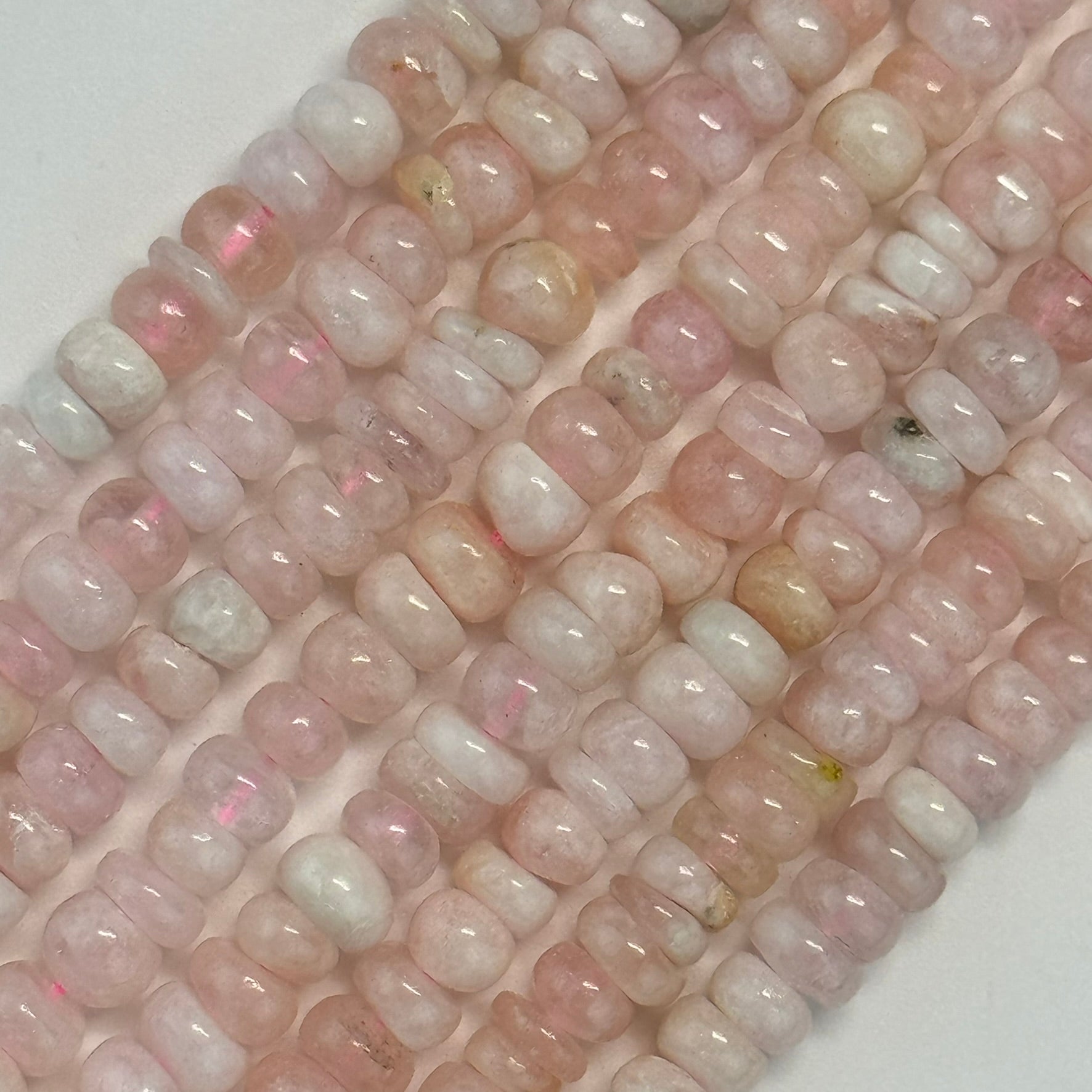
Rondelle Beads - Polished Collection
Explore our collection of Rondelle Beads with polished finish, perfect for elegant and timeless jewelry designs. Each bead is expertly smoothed to enhance its natural color and shine.
View All Polished Rondelle BeadsGray and White Agate Beads: Minimalist Elegance and Scientific Purity
Gray and White Agate beads represent the more subtle end of the agate spectrum, valued for their understated elegance and scientific interest in understanding pure chalcedony formation without significant color-causing impurities.

Formation Characteristics and Color Development
- Crystal System: Trigonal
- Mineral Class: Tectosilicate (Chalcedony)
- Formation: Low-temperature silica precipitation results in color variation due to trace impurities like aluminum and iron oxides
The neutral tones of gray and white agates result from minimal trace element contamination during formation. These agates form in relatively pure silica environments, where color-causing elements are present in only trace amounts.
Specialized Gray and White Agate Bead Types
Gray Agate Lentil Beads: Formed in stable low-energy hydrothermal environments, these beads exhibit uniform crystallite growth within microcrystalline silica matrices. The lentil shape maximizes the display of subtle color variations and internal structures.

White Agate Lentil Beads: Nearly pure chalcedony, with its milky appearance derived from light-scattering microinclusions of silica spherulites. The white coloration results from the interaction of light with these microscopic structures rather than from color-causing impurities.
Blue Lace Agate Beads: Tranquil Beauty and Optical Complexity
Blue Lace Agate stands out for its delicate, sky-blue coloration and intricate banding patterns. This variety combines aesthetic appeal with fascinating optical properties that result from its unique formation process.

Scientific Properties and Formation Process
- Crystal System: Trigonal
- Mineral Class: Tectosilicate (Chalcedony)
- Formation: Blue lace agate forms through silica deposition in volcanic vesicles, creating parallel fibrous chalcedony layers with diffraction-induced color variations
The blue coloration in Blue Lace Agate results from light diffraction through the parallel fibrous structure of the chalcedony, rather than from color-causing mineral inclusions. This creates the characteristic soft, sky-blue appearance.
Blue Lace Agate Bead Varieties
Blue Lace Agate Space Ship Beads: Featuring periodic color banding, these beads exhibit Bragg scattering effects under polarized light. The unique shape enhances the visibility of the delicate banding patterns. Shop Blue Lace Agate Beads.
Blue Lace Agate AAA Round Polished Beads: High-grade specimens with homogenous crystal alignment, enhancing translucency. The uniform crystal structure allows light to pass through more effectively, creating a luminous appearance.
Blue Lace Agate Faceted Round Beads: Precision-cut to exploit chalcedony's optical anisotropy, maximizing birefringent effects. The faceting creates multiple light paths, revealing the complex internal structure.
Crazy Lace Agate Beads: Dynamic Patterns and Iron Oxide Chemistry
Crazy Lace Agate represents one of the most visually dynamic agate varieties, characterized by swirling, chaotic banding patterns created through complex geochemical interactions. This variety demonstrates how iron oxide chemistry can create stunning visual effects.

Formation and Mineralogical Composition
- Crystal System: Trigonal
- Mineral Class: Tectosilicate (Chalcedony with Iron Oxides)
- Formation: Geochemical interactions between iron-rich fluids and silica solutions create swirling iron oxide inclusions, forming chaotic banding structures
The chaotic patterns in Crazy Lace Agate result from turbulent flow conditions during formation, where iron-rich fluids mix with silica solutions in unpredictable ways, creating the characteristic swirling patterns.
Crazy Lace Agate Bead Types
Crazy Lace Agate Faceted Barrel Beads (8×6 mm): Characterized by hematite and goethite inclusions, which produce complex fractal banding. The barrel shape showcases the intricate patterns from multiple viewing angles.
Golden Crazy Lace Agate Polished Round Beads: Iron oxide staining enhances yellow and ochre hues, indicating suboxic hydrothermal conditions. The golden tones result from specific iron oxidation states during formation.
Crazy Red Agate Polished Round Beads (8mm): Hematite-induced coloration results from ferric ion substitutions within the chalcedony lattice. The red coloration indicates higher oxidation levels during formation.
Moss and Tree Agate Beads: Dendritic Inclusions and Natural Artistry
Moss and Tree Agate varieties are distinguished by their dendritic inclusions, which create patterns resembling natural vegetation. These inclusions result from fascinating colloidal precipitation processes that create organic-looking structures within the chalcedony matrix.

Dendritic Formation and Scientific Significance
- Crystal System: Trigonal
- Mineral Class: Tectosilicate (Chalcedony with Manganese/Iron Inclusions)
- Formation: Dendritic inclusions form through colloidal precipitation of manganese and iron oxides within silica-saturated hydrothermal systems
The dendritic patterns in Moss and Tree Agate result from diffusion-limited aggregation, where manganese and iron oxides precipitate in branching patterns as they encounter the silica matrix. This process creates the characteristic tree-like or moss-like appearances.
Moss and Tree Agate Bead Varieties
Moss Agate Polished Round Beads (AAA Quality): Exhibiting intricate manganese dendrites, these beads form through fluid diffusion-controlled mineralization. The high-quality specimens show particularly well-developed dendritic patterns.
Tree Moss Agate Polished Round Beads: Characterized by fractal-like iron oxide networks, resembling vascular plant growth patterns. The branching patterns create depth and visual interest in each bead.
Sakura Agate Beads: Floral Inclusions and Plume Formation

Sakura Agate derives its name from its resemblance to cherry blossoms, with plume-like inclusions that create delicate, flower-like patterns. This variety demonstrates how mineral growth can create organic-appearing structures through natural processes.
Formation and Plume Development
- Crystal System: Trigonal
- Mineral Class: Tectosilicate (Chalcedony with Plume Inclusions)
- Formation: Plume-like mineral growths occur due to silica supersaturation and heterogeneous nucleation within confined geochemical environments
The plume-like inclusions in Sakura Agate form when mineral growth occurs in specific nucleation sites within the chalcedony matrix, creating the characteristic flower-like patterns that give this agate its name.
Sakura Agate Bead Types
Sakura Agate Rondelle Beads: Exhibiting cloud-like inclusions, these beads contain complex aggregates of iron hydroxides. The rondelle shape allows the plume patterns to be viewed from multiple angles.
Green Sakura Agate Polished Round Beads: Derived from trace chromium and iron impurities, producing distinct floral-like internal structures. The green coloration adds another dimension to the floral patterns.
Additional Agate Varieties: Diversity in Formation and Appearance
Beyond the major categories, numerous other agate varieties demonstrate the incredible diversity possible within this gemstone family. Each variety represents unique formation conditions and geochemical processes.
Formation Diversity and Varietal Characteristics
- Crystal System: Trigonal
- Mineral Class: Tectosilicate (Chalcedony)
- Formation: Hydrothermal mineralization in diverse geochemical environments results in a broad range of optical and structural variations
The diversity of agate varieties reflects the wide range of geochemical conditions possible during formation, from high-temperature volcanic environments to low-temperature sedimentary settings.
Specialized Agate Bead Varieties
Pink Fossil Agate Polished Round Beads (8mm): Fossilized microfossils within a chalcedony matrix contribute to pinkish hues. These beads preserve ancient biological structures while displaying beautiful coloration.
Golden Dendritic Agate Polished Round Beads: Metallic dendrites of iron and manganese oxides nucleate in low-energy sedimentary conditions. The golden coloration results from specific oxidation states of the included metals.
Dyed Green Agate Polished Round Beads (20mm): Synthetic enhancement modifies refractive indices while preserving natural microstructure. These beads demonstrate how enhancement techniques can improve appearance while maintaining natural characteristics.
Orange Sakura Agate Polished Round Beads: Displays interference coloration due to mineralogical diffusion. The orange tones result from specific trace element distributions during formation.
White Lace Agate Chalcedony Frosted Rondelle Beads: Frosted surfaces modify refractive properties, reducing total internal reflection effects. The frosted finish creates a soft, diffused appearance while maintaining the underlying structure.
Optical Properties and Light Interaction in Agate Beads
Understanding the optical properties of agate beads is essential for both scientific appreciation and practical jewelry applications. Different agate varieties interact with light in unique ways, creating distinctive visual effects.
Light Refraction and Banding Visibility
Agate beads display various optical phenomena:
- Birefringence: Double refraction creates depth and dimension in banded agates
- Light Scattering: Microcrystalline structures scatter light, creating translucency
- Interference Patterns: Thin layers create interference colors in some varieties
- Diffraction Effects: Parallel fibrous structures create diffraction colors
- Total Internal Reflection: Polished surfaces can create internal light reflection
- Absorption Bands: Trace elements create specific color absorption patterns
These optical properties contribute to the unique appearance of each agate variety and influence how they're best used in jewelry applications.
Jewelry Applications and Design Considerations
Different agate bead varieties offer unique advantages for various jewelry applications. Understanding the properties of each variety helps jewelry makers select the most appropriate beads for their designs.
Selecting Agate Beads for Specific Applications
Considerations for choosing agate beads include:
- Color Compatibility: Matching agate colors with design themes and other materials
- Pattern Visibility: Ensuring banding and inclusions are visible in the final design
- Durability Requirements: Selecting appropriate hardness for intended use
- Size and Shape: Choosing shapes that showcase unique characteristics
- Polish Quality: Ensuring surface finish enhances optical properties
- Uniformity: Selecting beads with consistent appearance for matching sets
These considerations help jewelry makers create pieces that maximize the beauty and appeal of agate beads.
Conclusion
Agate gemstone beads offer a fascinating study of silica mineralization under varying geochemical conditions. Their unique properties—ranging from optical anisotropy, crystallographic banding, and mineral inclusions—make them an essential component in jewelry craftsmanship and mineralogical research. Jewelry makers and gemologists alike appreciate these beads not only for their aesthetic appeal but also for the rich geological history encapsulated within each specimen.
The diversity of agate varieties, from the rhythmic banding of Botswana Agate to the dendritic patterns of Moss Agate, demonstrates the incredible range of natural processes that can create beautiful gemstones. Each variety tells a story of specific geological conditions, geochemical interactions, and time scales that combined to create unique and beautiful results.
Understanding the scientific properties and formation processes of different agate varieties enriches appreciation for these remarkable gemstones. Whether used in jewelry making, scientific study, or personal collection, agate beads represent a perfect intersection of natural beauty, scientific interest, and practical application.
Explore Agate Gemstone Beads Collection to discover the full range of agate varieties available, each with its own unique characteristics, formation history, and aesthetic appeal. From the scientifically fascinating to the visually stunning, agate beads offer something for every interest and application.