

Blue Kyanite and Green Kyanite: Types, Properties, and Uses
Kyanite Gemstone: Scientific, Historical, and Metaphysical Guide
Table of Contents
- Scientific Overview of Kyanite
- Types of Kyanite (Blue, Green, Black)
- Meaning and Spiritual Properties
- History and Origins
- Geographic Distribution
- Industrial Applications
- Jewelry Design & Bead Shapes
- Caring for Kyanite Jewelry
- How to Choose Kyanite Beads
Blue Kyanite (Al₂SiO₅) – Scientific Overview
Blue Kyanite is an aluminum silicate mineral with the chemical formula Al₂SiO₅. It forms in high-pressure, low-temperature metamorphic rocks and is often found in quartz veins, schists, and gneisses. The crystal structure of kyanite is unique, displaying anisotropic hardness—it is harder along its length (Mohs hardness 4-5) and softer across its width (Mohs hardness 6-7).
Its striking blue color comes from trace amounts of iron (Fe²⁺ and Fe³⁺) in its composition. Kyanite exhibits a bladed crystal habit, meaning it forms in long, thin structures. It is used in industrial applications due to its heat resistance, making it valuable in ceramics, refractory materials, and electronics.
While primarily known for its deep blue hue, kyanite can also appear in shades of green, black, and orange, depending on mineral inclusions and environmental conditions.

Green Kyanite (Al₂SiO₅) – Scientific Overview
Green Kyanite is a variety of kyanite, an aluminum silicate mineral with the chemical formula Al₂SiO₅. It forms under high-pressure, low-temperature conditions in metamorphic rocks such as schists and quartz veins.
Like other kyanite varieties, Green Kyanite is anisotropic, meaning its hardness varies depending on the direction— 4.5-5 on the Mohs scale lengthwise and 6.5-7 crosswise. Its green color results from trace elements like chromium or iron.
Green Kyanite typically occurs in bladed crystal formations and may display slight transparency. It is valued not only for its beauty in jewelry but also for its industrial use in heat-resistant materials and ceramics.

Black Kyanite (Al₂SiO₅) – Scientific Overview
Black Kyanite is a variety of kyanite, an aluminum silicate mineral with the chemical formula Al₂SiO₅. It forms in high-pressure, low-temperature metamorphic rocks, often alongside quartz, mica, and garnet.
Like other kyanite types, it exhibits anisotropic hardness—Mohs hardness 4-5 lengthwise and 6.5-7 crosswise. Its black color comes from the presence of iron and graphite impurities. Unlike blue or green kyanite, black kyanite often forms in fan-like or blade-shaped crystal structures.
This mineral is commonly found in Brazil, India, Myanmar, and the United States. Due to its high heat resistance, it is also used in industrial ceramics, refractory materials, and electronics.
Kyanite Meaning
Kyanite is known as a stone of alignment and clarity. It helps balance energy, clear blockages, and promote inner peace. This crystal is strongly connected to communication, intuition, and self-expression.
Kyanite Healing Properties:
✔ Blue Kyanite – Enhances communication, mental clarity, and self-expression.
✔ Green Kyanite – Supports emotional healing, balance, and personal growth.
✔ Black Kyanite – Grounds energy and offers protection from negativity.
✔ Orange Kyanite – Boosts creativity, motivation, and confidence.
Kyanite is also self-cleansing, meaning it does not retain negative energy. It is widely used for meditation, chakra alignment, and energy healing.
Kyanite Crystal: History and Where It's Found
History
Kyanite stone has been valued for centuries for both its beauty and industrial uses. Ancient civilizations admired it for its deep blue color, often mistaking it for sapphire. Some cultures believed it had mystical properties, using it as a tool for spiritual insight and energy alignment. In more recent history, kyanite became important in the ceramic and refractory industries due to its high heat resistance.
Where It's Found
Kyanite is found in metamorphic rocks formed under high pressure. Major deposits exist in Brazil, Nepal, Switzerland, Russia, India, and the United States (especially in Virginia and Georgia). High-quality specimens are also mined in Kenya, Madagascar, and Myanmar. Different colors of kyanite, including blue, green, black, and orange, occur due to variations in trace minerals present during formation.
Kyanite in Jewelry Design and Everyday Wear
Because of its bladed crystal structure and vivid coloration, kyanite translates beautifully into gemstone beads and finished jewelry. In bead form, it offers a smooth, cool feel on the skin and a subtle shimmer that looks elegant in both casual and formal pieces. Designers often choose kyanite when they want a gemstone that feels refined but still has a slightly raw, natural character.
Popular Bead Shapes and Cuts
At Reza Gem Collection, kyanite is available in polished rounds, faceted rondelles, and organic nuggets. Round beads are ideal for classic bracelets and malas, while faceted beads catch the light and add sparkle to minimalist necklaces. Blade-shaped or chip beads highlight the natural crystal habit of kyanite and are perfect for boho or asymmetrical designs. When you combine different shapes in a single piece, you can create depth and texture without overwhelming the eye.
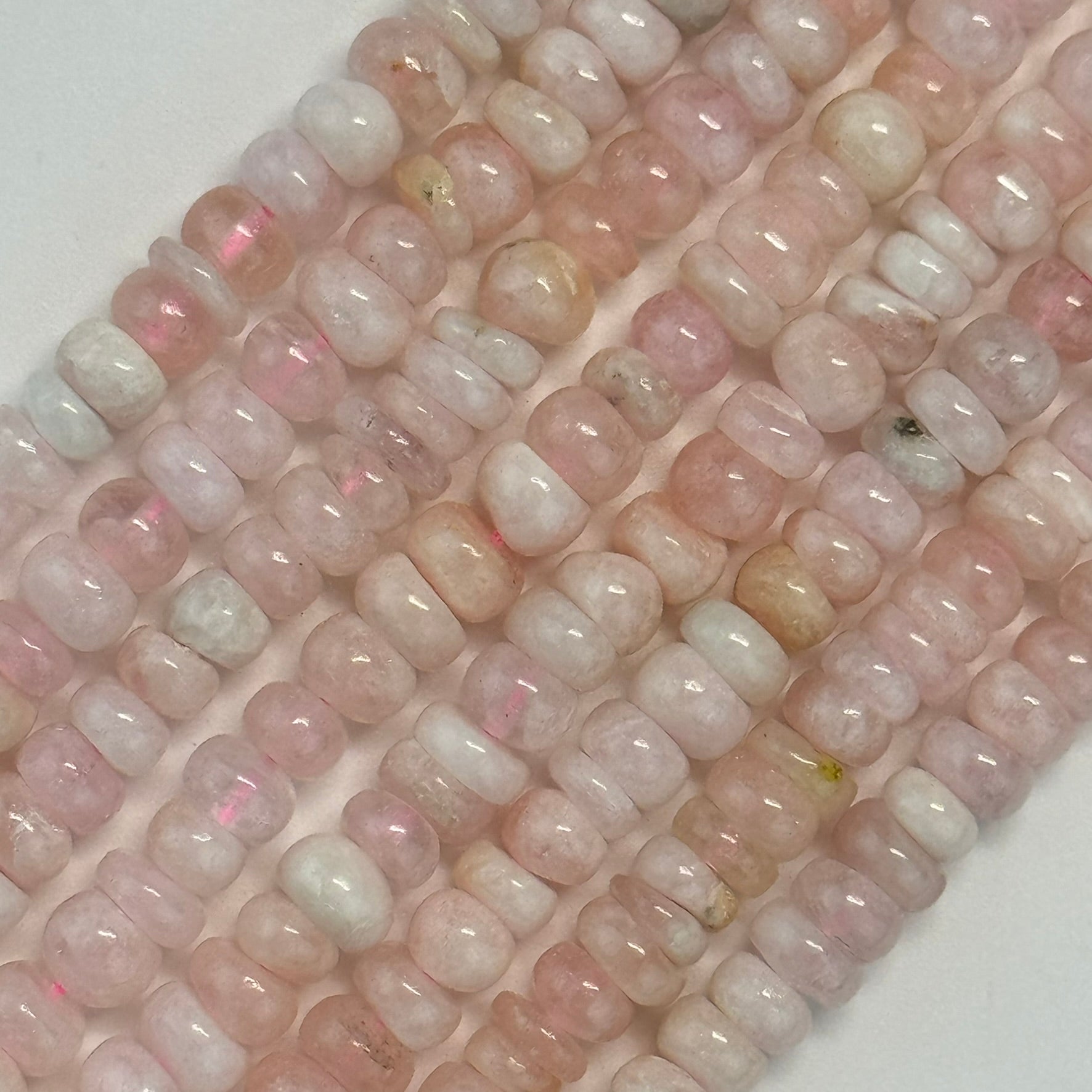
Rondelle Beads - Polished Collection
Explore our collection of Rondelle Beads with polished finish, perfect for elegant and timeless jewelry designs. Each bead is expertly smoothed to enhance its natural color and shine.
View All Polished Rondelle BeadsPairing Kyanite with Other Gemstones
Blue Kyanite pairs beautifully with neutral stones like clear quartz, moonstone, and white jade, which allow its color to stand out. For a bolder palette, you can mix it with warm stones such as carnelian or citrine to create contrast between cool and warm hues. Green Kyanite looks harmonious with earthy gems such as moss agate, prehnite, and unakite, while Black Kyanite adds drama when combined with metallic spacers, pyrite, or hematite. These combinations are popular in bracelets, layered necklaces, and earrings designed for everyday wear.
Working with Kyanite in Energy and Chakra Practices
In metaphysical traditions, kyanite is strongly associated with the throat and third-eye chakras, making it a favorite for those who work with communication and intuition. Blue Kyanite is often worn near the throat to support honest expression and clear dialogue, whether in personal relationships or professional settings. Green Kyanite is linked to the heart chakra and is used to encourage emotional balance, compassion, and growth, while Black Kyanite is considered grounding and protective, connecting the higher energy centers to the root.
Meditation and Alignment
Many practitioners place a piece of kyanite along the spine or between the brows during meditation to promote energetic alignment. Because kyanite is said to be self-cleansing, it is frequently used as a companion stone to other crystals, helping to reset and harmonize energy without needing frequent clearing. Wearing kyanite beads in a bracelet or necklace can be a subtle way to carry this supportive energy throughout the day.
How to Identify Quality Kyanite Beads
High-quality kyanite beads display rich, even color with a characteristic silky sheen. In Blue Kyanite, look for saturated blues with gentle streaks or zoning rather than dull, washed-out tones. Fine Green Kyanite ranges from soft pastel to deeper green, often with a slightly translucent appearance. While inclusions are normal in natural stones, excessive fractures or cloudy patches can weaken the bead and affect durability.
Tips from a Gemologist’s Perspective
Gemologist Reza Piroznia handpicks kyanite beads with an eye for both structural integrity and beauty. He examines the direction of the crystal grain, clarity, and polish to ensure that each strand can withstand normal wear. When shopping for kyanite, choose reputable sources that clearly label natural versus treated stones, and pay attention to consistency within a strand—well-matched beads indicate careful sorting and higher overall quality.
Caring for Kyanite Jewelry
Although kyanite has good hardness across one axis, its anisotropic structure means it can be more vulnerable to impact or pressure along other directions. To keep your kyanite jewelry in excellent condition, avoid dropping it, bending wire directly against the stone, or wearing it during high-impact activities. Store kyanite pieces separately from harder gemstones such as sapphire or diamond to prevent scratching.
Cleaning is simple: use lukewarm water, a mild soap, and a soft cloth, then dry thoroughly before storing. Ultrasonic and steam cleaners are not recommended, as the combination of heat and vibration can exploit natural cleavage planes within the stone. With thoughtful care, kyanite beads can remain vibrant and wearable for many years.
Choosing Kyanite Beads for Your Next Project
Whether you are a professional jewelry designer or a hobbyist, kyanite offers a balance of scientific fascination, visual beauty, and spiritual symbolism. Blue Kyanite works wonderfully as a focal bead in a pendant or as a repeating element in malas and wrap bracelets. Green and Black Kyanite can be used as accent stones that bring grounding and dimension to a design built around more common gemstones.
If you are just starting to work with kyanite, consider beginning with a strand of polished round beads in a versatile size like 6 mm or 8 mm. These sizes are comfortable to wear, easy to string, and pair well with metal spacers or seed beads. As you gain confidence, you can explore blade shapes, faceted cuts, and mixed-color strands to create more advanced statement pieces.
Explore Handpicked Kyanite Beads
Every kyanite strand at Reza Gem Collection is carefully inspected for authenticity, color, and cut quality. If you have questions about which type of kyanite is best for your design or spiritual practice, you can reach out for personalized guidance.
Call Reza Gem Collection Chat on WhatsApp