
Fuchsite Gemstone Beads


What Is Fuchsite?
Fuchsite is a green variety of muscovite mica, distinguished by the presence of chromium, which gives it its characteristic emerald to light green color. It belongs to the phyllosilicate group and is often found in metamorphic rocks, especially schists.
Due to its sparkling surface and vibrant hue, fuchsite is both scientifically interesting and aesthetically appealing. It's commonly used in lapidary work and metaphysical practices, making it a popular choice among collectors and jewelry makers.
Fuchsite Crystal Overview
Fuchsite crystals usually form in thin, platy layers with a pearly to vitreous luster. These crystals are often found intergrown with quartz or as inclusions in other minerals, giving them a layered appearance with a shimmering effect.
It is not a standalone mineral species but rather a chromium-rich variant of muscovite. Its structural and optical properties reflect its place in the mica family, exhibiting perfect basal cleavage and a Mohs hardness of about 2–3.
Fuchsite Beads for Jewelry Making
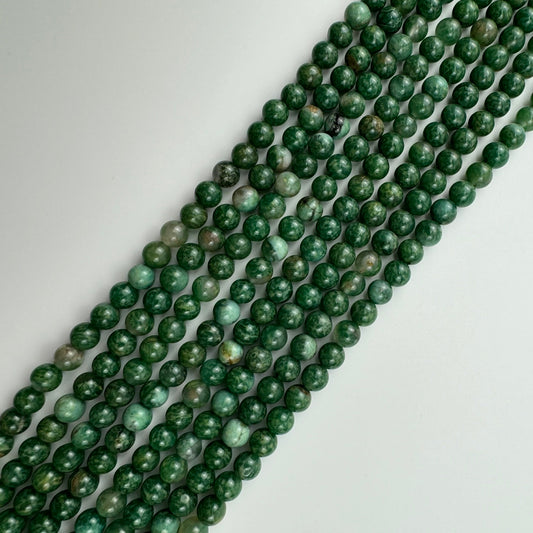
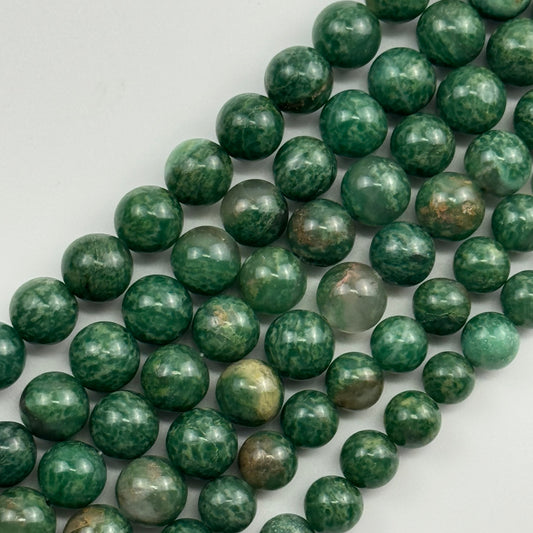
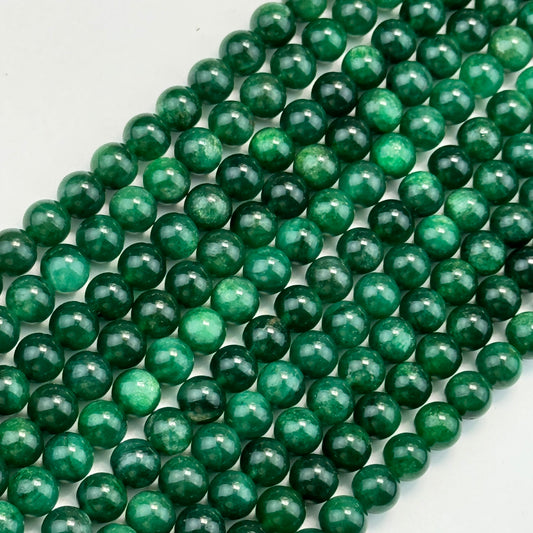
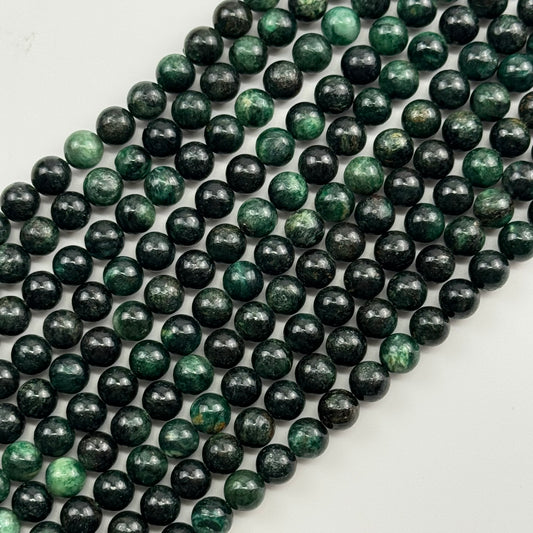
Fuchsite beads are prized for their glittering texture and rich green hues, making them ideal for bracelets, necklaces, and other types of artisan jewelry. The reflective mica surface adds a natural shimmer that enhances the aesthetic value of each piece.
Due to its relative softness, fuchsite beads are often stabilized or backed with quartz to improve durability. Handpicked and polished, these beads are popular among designers looking to add a natural and earthy touch to their creations.
Fuchsite Color and Appearance
The color of fuchsite ranges from pale green to deep emerald, primarily due to the presence of chromium in its chemical structure. The mineral’s surface often displays a sparkling sheen, a result of its layered crystal structure.
In its raw form, fuchsite can look flaky or fibrous, while polished specimens reveal a vibrant, glassy luster. The visual appeal makes it a favorite among both collectors and crystal healers.
Fuchsite Meaning, Benefits, and Healing Properties
In metaphysical circles, fuchsite is regarded as a stone of rejuvenation and heart-centered energy. It is believed to help in emotional recovery and to promote a sense of compassion and resilience.
Practitioners often use fuchsite to balance the heart chakra and support physical healing, especially for ailments related to stress or fatigue. While these properties aren't scientifically proven, they contribute to the stone’s popularity in spiritual and holistic communities.
Is There Such a Thing as Ruby Fuchsite?
Yes, ruby fuchsite is a natural combination of red corundum (ruby) and green chromium-rich fuchsite. This unique mineral pairing is not only visually striking but also geologically fascinating, as it results from specific pressure and temperature conditions during metamorphism.
Ruby fuchsite is widely used in jewelry and metaphysical practices due to its vivid contrast of red and green hues. The stone symbolizes vitality, courage, and heart-centered growth, combining the energies of both ruby and fuchsite.
The Mineral Composition of Fuchsite
Fuchsite is a chromium-bearing variety of muscovite, a potassium aluminum silicate belonging to the mica group. Its chemical formula is K(Al,Cr)2(AlSi3O10)(OH)2, where chromium partially replaces aluminum in the crystal structure.
The presence of chromium is critical not only to its color but also to some of its minor chemical and optical variations. These compositional details make fuchsite a subject of interest for mineralogists and geologists alike.
How Fuchsite Forms in Nature
Fuchsite forms in metamorphic environments, particularly within schists and phyllites that have undergone regional metamorphism. The chromium necessary for its formation is typically sourced from surrounding ultramafic rocks.
Its development is closely tied to the alteration of other mica minerals in the presence of chromium, making its occurrence somewhat limited to specific geological conditions.
Fuchsite as a Chromium-Rich Variety of Muscovite
Fuchsite is essentially muscovite that has undergone chromium substitution, which significantly alters its appearance and properties. Unlike standard muscovite, fuchsite’s green coloration and higher chromium content distinguish it within the mica group.
This substitution affects not only its color but also its trace element content, making it identifiable through both visual inspection and mineralogical testing techniques such as X-ray diffraction and electron microprobe analysis.
Physical and Optical Properties of Fuchsite
Fuchsite displays a pearly to vitreous luster and has perfect cleavage on one plane due to its layered mica structure. Its hardness is relatively low, ranking about 2–3 on the Mohs scale, which makes it soft but flexible.
Optically, fuchsite is translucent in thin sheets and exhibits pleochroism, where the green shade varies slightly when viewed from different angles. It also has a specific gravity of around 2.8–2.9.
Geological Locations Where Fuchsite Is Found
Fuchsite is found in metamorphic rock formations in several parts of the world. Major deposits are located in Brazil, India, Russia, and the United States. These regions provide the specific pressure and chromium-rich conditions needed for its formation.
In some locales, fuchsite is found alongside quartz and corundum, forming the popular ruby fuchsite combination. Its presence often indicates regional metamorphism and the transformation of chromium-rich rocks.
Fuchsite vs. Other Mica Minerals: A Scientific Comparison
Compared to other mica minerals like muscovite and biotite, fuchsite stands out due to its chromium content and green coloration. While muscovite is usually colorless to silvery, and biotite is typically black or brown, fuchsite's vivid green is unique.
Structurally, fuchsite shares the same sheet silicate framework as its relatives, but its chemical composition gives it different physical and optical properties. It also reacts differently under polarized light and mineral testing tools.
The Role of Chromium in Fuchsite’s Green Color
Chromium is the key element responsible for the green color of fuchsite. When chromium atoms substitute for aluminum in the muscovite crystal lattice, they alter the way light interacts with the mineral’s surface, resulting in its vibrant hue.
The intensity of the green depends on the concentration of chromium. This makes chromium not only a colorant but also a diagnostic element when identifying fuchsite in a geological setting.
Crystal Structure and Hardness of Fuchsite
Fuchsite, like all mica minerals, has a layered or phyllosilicate structure, with sheets of silicate tetrahedra bonded together by interlayer cations. This structure is responsible for its perfect basal cleavage and its ability to flake easily.
Its hardness of 2–3 on the Mohs scale makes it relatively soft, so it is typically used in low-impact decorative applications. Despite its fragility, the structure provides flexibility and a natural shimmer when light hits the flat planes.
What is Fuchsite: Understanding This Green Mica Gemstone
Fuchsite stands as a beautiful and distinctive green gemstone, celebrated for its vibrant green color and its reputation for enhancing heart chakra energy, emotional healing, and self-love. This fuchsite stone has been treasured for centuries, not only for its aesthetic beauty but also for its powerful metaphysical properties. Understanding what fuchsite is helps appreciate why this crystal has become so highly valued by crystal healers, jewelry makers, and collectors worldwide.
The Definition and Origins of Fuchsite
Fuchsite is a green variety of muscovite mica, named after German mineralogist Johann Nepomuk von Fuchs, who first identified this distinctive green stone. This fuchsite gemstone forms in metamorphic rocks and pegmatites, creating the beautiful green crystals that make this fuchsite stone so distinctive. Fuchsite occurs naturally in various locations worldwide, with each region producing fuchsite with slightly different characteristics and crystal formations.
- Fuchsite is a green variety of muscovite mica
- Named after German mineralogist Johann Nepomuk von Fuchs
- Found in various locations including India, Brazil, and Russia
- Used as both a mineral specimen and gemstone
- Characterized by its distinctive green color
- Forms in beautiful green crystals with pearly luster
- Major sources include India (major source), Brazil, Russia, and United States
At Reza Gem Collection, we source our fuchsite from trusted suppliers worldwide, ensuring that each fuchsite gemstone meets our high standards for quality and color. Our collection includes various fuchsite varieties, from the Fuchsite Beads - Polished Round showcasing exceptional green hues to stunning polished options like the Fuchsite Beads - Polished Round - (AAA Quality).
The fuchsite stone forms through complex geological processes that occur in metamorphic environments. As chromium-rich solutions interact with muscovite mica, fuchsite develops with its characteristic green coloration. This natural formation process creates the unique green patterns and crystal structures that make each piece of fuchsite distinctive, with green fuchsite being particularly valued for its rich, saturated color.
- Key characteristics of fuchsite
- Mineral: Muscovite mica (potassium aluminum silicate)
- Color: Green (from chromium)
- Mohs hardness: 2 to 3 (very soft, requires careful handling)
- Crystal system: Monoclinic
- Luster: Pearly to vitreous
- Often found with ruby or emerald inclusions
Ruby Fuchsite: The Popular Combination Variety
Ruby fuchsite features ruby crystals embedded in green fuchsite, creating beautiful contrast between red ruby and green fuchsite that makes this variety highly valued for its visual appeal and metaphysical properties. This ruby in fuchsite combination is popular in crystal healing and jewelry, combining properties of both ruby and fuchsite.
- Ruby fuchsite features ruby crystals embedded in green fuchsite
- Creates beautiful contrast between red ruby and green fuchsite
- Highly valued for its visual appeal and metaphysical properties
- Popular in crystal healing and jewelry
- Combines properties of both ruby and fuchsite
- Ruby and fuchsite combination offers striking visual appeal
- Ruby in fuchsite creates unique color contrast
Understanding ruby fuchsite helps appreciate why this variety has become so popular. The ruby and fuchsite combination creates a striking visual contrast between the red ruby crystals and the green fuchsite matrix, while combining the passion and energy of ruby with the heart-healing properties of fuchsite.
Ruby fuchsite is a natural combination that results from specific pressure and temperature conditions during metamorphism. This ruby in fuchsite variety is widely used in jewelry and metaphysical practices due to its vivid contrast of red and green hues, symbolizing vitality, courage, and heart-centered growth.
Fuchsite Colors and Varieties
Fuchsite displays a range of beautiful green colors, with green fuchsite being the most common and characteristic variety. Understanding the different fuchsite varieties helps collectors and crystal practitioners appreciate the full spectrum of this gemstone's beauty and choose pieces that best suit their needs and preferences.
- Green fuchsite: Most common variety, characteristic green color
- Ruby fuchsite: Ruby inclusions in green fuchsite
- Emerald fuchsite: Emerald inclusions in fuchsite
- Color variations based on trace elements and inclusions
- Green color comes from chromium content
- Green fuchsite typically most common
- Ruby fuchsite typically most valuable
Green fuchsite remains the most common variety, featuring the characteristic green color that makes this gemstone so distinctive. Green fuchsite's color ranges from pale green to deep emerald, primarily due to the presence of chromium in its chemical structure, creating the vibrant green appearance that collectors and crystal practitioners seek.
Ruby fuchsite offers a striking combination of red ruby crystals within green fuchsite matrix, creating a visually stunning variety that combines the properties of both minerals. This ruby and fuchsite combination is highly valued for both its aesthetic appeal and its powerful metaphysical properties.
Emerald fuchsite features emerald inclusions within fuchsite, creating another beautiful combination variety. While less common than ruby fuchsite, emerald fuchsite offers unique beauty for those seeking something distinctive in their crystal collections.
Understanding fuchsite colors helps appreciate the natural variations that occur in this gemstone. Whether you choose green fuchsite for its characteristic color, ruby fuchsite for its striking contrast, or emerald fuchsite for its unique beauty, each variety offers its own distinctive charm and properties.
Ruby Fuchsite: Red and Green Beauty Combined
Ruby fuchsite represents one of the most popular and visually striking forms of this beautiful gemstone, combining red ruby crystals with green fuchsite matrix to create a stunning contrast that has become highly valued by crystal practitioners and jewelry makers. This ruby fuchsite variety offers both aesthetic beauty and powerful energetic properties.
Understanding Ruby Fuchsite
Ruby fuchsite combines red ruby crystals with green fuchsite matrix, creating striking visual contrast that makes this variety highly distinctive. Ruby appears as red crystals or patches within green fuchsite, making this ruby in fuchsite combination highly valued for both aesthetic and metaphysical properties.
- Ruby fuchsite combines red ruby crystals with green fuchsite matrix
- Creates striking visual contrast
- Ruby appears as red crystals or patches within green fuchsite
- Highly valued for both aesthetic and metaphysical properties
- Popular in crystal healing and jewelry
- Ruby and fuchsite combination offers unique beauty
- Ruby in fuchsite creates powerful energetic combination
Understanding ruby fuchsite helps appreciate why this variety has become so popular. The ruby and fuchsite combination creates a natural pairing that results from specific geological conditions during metamorphism, where ruby crystals form within the green fuchsite matrix, creating the distinctive appearance that makes this variety so sought after.
Ruby fuchsite is a natural combination that is not only visually striking but also geologically fascinating. This ruby in fuchsite variety symbolizes vitality, courage, and heart-centered growth, combining the energies of both ruby and fuchsite in a powerful way.
- Ruby fuchsite characteristics
- Red ruby crystals in green fuchsite matrix
- Striking visual contrast
- Combines properties of both minerals
- Excellent for heart chakra work
- Popular in crystal healing
- Requires careful handling due to softness
Ruby Fuchsite Meaning and Properties
The ruby fuchsite meaning encompasses the combined properties of both ruby and fuchsite, creating a powerful crystal for heart chakra work, emotional healing, and vitality. Understanding the ruby fuchsite meaning helps crystal practitioners appreciate the unique benefits this variety offers.
- Combines ruby's passion and energy with fuchsite's heart healing
- Enhances love, compassion, and emotional healing
- Promotes vitality and life force
- Supports heart chakra activation
- Powerful combination for emotional and physical healing
- Ruby fuchsite meaning includes vitality and heart healing
- Ruby fuchsite healing properties support emotional balance
The ruby fuchsite meaning reflects the stone's ability to combine the passion and energy of ruby with the heart-healing properties of fuchsite, creating a comprehensive tool for emotional and physical healing. This meaning makes ruby fuchsite particularly valuable for those seeking to enhance love, compassion, and emotional healing while promoting vitality and life force.
Ruby fuchsite healing properties combine the best of both minerals, creating a crystal that supports both emotional healing and physical vitality. The ruby fuchsite crystal properties enhance heart chakra activation while providing the passion and energy needed for personal growth and transformation.
Ruby fuchsite metaphysical properties make this variety particularly effective for heart chakra work, emotional healing, and vitality enhancement. These properties support both emotional balance and physical well-being, creating a balanced approach to healing and growth.
Ruby Fuchsite Jewelry and Decor
Ruby fuchsite has become increasingly popular in jewelry and home decor, offering beautiful red and green contrast combined with meaningful properties. From ruby fuchsite pendants to bracelets and decorative pieces, this variety provides both aesthetic appeal and energetic support.
- Ruby fuchsite pendants and necklaces
- Ruby fuchsite bracelets for continuous benefits
- Ruby fuchsite spheres and towers for home decor
- Protective settings essential due to softness
- Popular in both fashion and spiritual jewelry
- Ruby fuchsite jewelry offers striking color contrast
- Ruby fuchsite crystal decor provides aesthetic and energetic benefits
Ruby fuchsite jewelry provides an elegant way to wear this beautiful combination stone, with protective settings ensuring durability for daily wear. A ruby fuchsite pendant or bracelet offers both the aesthetic appeal of the red and green contrast and the heart-healing properties that make this crystal so valued.
Ruby fuchsite jewelry in all forms benefits from very protective settings that help preserve the stone's beauty while allowing it to be worn regularly. Whether you choose ruby fuchsite bracelets for continuous energetic support, necklaces for prominent display, or decorative pieces for home decor, ruby fuchsite jewelry combines beauty with meaningful properties.
Fuchsite Meaning and Healing Properties
The fuchsite meaning and healing properties make this crystal particularly valuable for those seeking stones that support heart chakra energy, emotional healing, self-love, and compassion. Understanding the fuchsite meaning helps crystal practitioners and jewelry wearers appreciate the deeper significance of their pieces, beyond mere aesthetic appeal.
The Spiritual Meaning of Fuchsite
The spiritual meaning of fuchsite centers around love, compassion, emotional healing, and heart chakra activation, making this crystal valuable for those seeking to enhance their self-love, acceptance, and ability to give and receive love. The fuchsite meaning encompasses growth, renewal, and new beginnings, creating a crystal that supports both personal development and emotional healing.
- Symbolizes love, compassion, and emotional healing
- Associated with the heart chakra
- Believed to enhance self-love and acceptance
- Represents growth, renewal, and new beginnings
- Promotes feelings of peace and harmony
- Fuchsite meaning emphasizes heart healing
- Spiritual meaning includes compassion and self-love
The fuchsite spiritual meaning reflects the stone's ability to support heart chakra activation and emotional healing. This spiritual meaning makes fuchsite particularly valuable for those dealing with emotional wounds, relationship issues, or seeking to enhance their capacity for love and compassion.
Understanding the meaning of fuchsite helps appreciate why this crystal has become associated with heart healing and emotional balance. The spiritual meaning emphasizes the stone's ability to help individuals open their hearts, enhance self-love, and promote feelings of peace and harmony.
Fuchsite Healing Properties and Benefits
Fuchsite healing properties encompass a wide range of emotional, physical, and spiritual benefits, making this crystal valuable for those seeking holistic support for their well-being. The fuchsite benefits include enhanced self-love, improved relationships, emotional healing, and support for heart chakra activation.
- Emotional healing and heart chakra activation
- Enhanced self-love and acceptance
- Support for relationships and communication
- Aid in overcoming emotional wounds
- Promotes compassion and empathy
- Encourages personal growth and transformation
- Fuchsite healing properties support emotional balance
- Healing properties of fuchsite include heart chakra work
The fuchsite healing properties make this stone particularly valuable for those dealing with emotional wounds, relationship issues, or difficulty with self-love. These healing properties support emotional healing while enhancing self-love and acceptance, creating a foundation for improved relationships and personal growth.
Fuchsite benefits extend to relationship support and communication, making this stone valuable for those seeking to improve their connections with others. The healing properties support heart chakra activation while promoting compassion and empathy, creating a foundation for healthier relationships.
- Key spiritual properties of fuchsite
- Heart chakra activation
- Emotional healing and balance
- Self-love and acceptance
- Compassion and empathy
- Relationship support
- Personal growth and transformation
Fuchsite Metaphysical Properties
Fuchsite metaphysical properties encompass the crystal's energetic qualities and chakra associations, making this stone valuable for those working with energy healing and spiritual development. Understanding fuchsite properties helps crystal practitioners use this stone effectively in their healing and spiritual practices.
- Heart chakra activation and balancing
- Emotional healing and release
- Enhanced self-love and acceptance
- Support for relationships and communication
- Connection to nature and earth energy
- Promotion of compassion and empathy
- Fuchsite metaphysical properties support heart healing
- Fuchsite crystal properties enhance emotional balance
The fuchsite metaphysical properties make this stone particularly effective for chakra work, especially with the heart chakra. These properties support both emotional healing and the development of self-love and compassion, creating a balanced approach to spiritual growth.
Understanding fuchsite properties helps crystal practitioners use this stone effectively in their healing and spiritual practices. The metaphysical properties support heart chakra activation, emotional healing, and relationship support, making fuchsite valuable for meditation, energy work, and any activity requiring heart-centered focus.
Fuchsite Jewelry: Rings, Bracelets, and Elegant Designs
Fuchsite jewelry has become increasingly popular, offering beautiful green hues combined with meaningful properties that make each piece both aesthetically pleasing and energetically supportive. From fuchsite rings to bracelets and necklaces, this crystal provides versatile options for jewelry lovers seeking both beauty and purpose.
Fuchsite Rings and Pendants
Fuchsite rings provide an elegant way to wear this beautiful green crystal, offering both aesthetic appeal and continuous energetic support. A fuchsite ring combines the stone's vibrant green color with its heart-healing properties, making it perfect for everyday wear or special occasions.
- Fuchsite rings for everyday elegance
- Ruby fuchsite rings for vibrant color contrast
- Fuchsite pendants showcasing natural green beauty
- Protective settings essential due to very soft nature (hardness 2-3)
- Traditional and modern fuchsite ring designs
- Fuchsite ring offers continuous energetic support
- Fuchsite jewelry rings combine beauty with meaning
A fuchsite ring offers the opportunity to wear this beautiful green crystal close to the skin, allowing for continuous energetic support throughout the day. Ruby fuchsite rings provide excellent visual appeal due to their red and green contrast, while very protective settings are essential due to fuchsite's very soft nature (hardness 2-3).
Fuchsite jewelry in ring form benefits from very protective settings that help preserve the stone's beauty while allowing it to be worn regularly. Whether you choose a simple solitaire fuchsite ring or a more elaborate design with accent stones, fuchsite rings provide both aesthetic appeal and meaningful energy.
Fuchsite Bracelets and Necklaces
Fuchsite bracelets and necklaces offer versatile options for wearing this beautiful green crystal, providing continuous energetic support while allowing for creative design possibilities. From beaded fuchsite bracelets to necklaces, this crystal provides numerous options for jewelry makers and wearers.
- Beaded fuchsite bracelets for daily wear
- Ruby fuchsite bracelets for continuous benefits
- Fuchsite necklaces featuring green stones
- Charm bracelets with fuchsite beads
- Protective settings for very soft stone
- Fuchsite bracelet offers continuous energetic support
- Fuchsite necklace provides prominent display
Our collection includes various fuchsite bead options perfect for creating bracelets and necklaces, including the Fuchsite Beads - Polished Round, Fuchsite Beads - Polished Round - (AAA Quality), and Fuchsite Beads - Polished Round (Green-Based). These beads provide excellent options for jewelry makers seeking to create fuchsite bracelets and necklaces that combine beauty with meaningful properties.
A fuchsite bracelet offers the opportunity to wear this beautiful green crystal in a comfortable, everyday format. Ruby fuchsite bracelets provide excellent visual appeal while showcasing the stone's red and green contrast, making them perfect for continuous wear with appropriate care.
A fuchsite necklace provides an excellent way to wear this stone prominently, showcasing its vibrant green color while benefiting from its heart-healing properties. Fuchsite pendants offer versatility, allowing the stone to be worn with various chain styles and lengths.
- Popular fuchsite jewelry types
- Fuchsite rings (fashion, statement, traditional)
- Fuchsite necklaces and pendants
- Fuchsite bracelets (beaded, charm, bangle)
- Ruby fuchsite jewelry (all types)
- Fuchsite crystal decor pieces
Ruby Fuchsite Jewelry
Ruby fuchsite jewelry has become increasingly popular, offering beautiful red and green contrast combined with meaningful properties. From ruby fuchsite rings to pendants and bracelets, this variety provides both aesthetic appeal and energetic support.
- Ruby fuchsite rings for striking color contrast
- Ruby fuchsite pendants and necklaces
- Ruby fuchsite bracelets for heart chakra work
- Protective settings essential
- Popular in spiritual and fashion jewelry
- Ruby fuchsite jewelry offers unique beauty
- Ruby fuchsite jewelry combines aesthetics with meaning
Ruby fuchsite jewelry provides an elegant way to wear this beautiful combination stone, with very protective settings ensuring durability for daily wear. A ruby fuchsite ring or bracelet offers both the aesthetic appeal of the red and green contrast and the heart-healing properties that make this crystal so valued.
Understanding ruby fuchsite jewelry helps appreciate the versatility and beauty this variety offers. Whether you choose individual ruby fuchsite jewelry pieces or coordinated sets, ruby fuchsite jewelry combines aesthetic appeal with meaningful symbolism, making it a valuable addition to any jewelry collection.
Fuchsite Properties: Physical and Metaphysical Characteristics
Understanding fuchsite properties helps collectors, jewelry makers, and crystal practitioners appreciate both the physical characteristics that make this crystal suitable for jewelry and the metaphysical properties that make it valuable for healing and spiritual work. The fuchsite gemstone offers a unique combination of beauty and energetic qualities.
Physical Properties of Fuchsite
The physical properties of fuchsite make this crystal suitable for jewelry use with very careful handling and very protective settings, though its very soft nature requires extreme care. Understanding fuchsite hardness and other physical characteristics helps ensure proper care and appropriate use in jewelry designs.
- Mohs hardness: 2 to 3 (very soft, requires very careful handling)
- Specific gravity: 2.76 to 2.88
- Chemical composition: KAl2(AlSi3O10)(OH)2 (potassium aluminum silicate)
- Luster: Pearly to vitreous
- Transparency: Transparent to translucent
- Crystal system: Monoclinic
- Perfect cleavage in one direction
- Fuchsite hardness requires very protective settings
- Fuchsite gemstone properties support careful handling
Fuchsite hardness is 2 to 3 on the Mohs scale, making this crystal very soft and requiring extremely careful handling and very protective settings for jewelry use. This hardness level means fuchsite can be worn in very protective settings, though it should be protected from all impacts, harsh chemicals, and extreme temperatures.
Understanding fuchsite properties helps ensure proper care and maintenance. The crystal's very soft nature makes it suitable for rings, bracelets, and necklaces with very protective settings, while its beautiful green color and pearly to vitreous luster create an attractive appearance that works well in various jewelry styles.
Fuchsite's perfect cleavage in one direction means it can flake easily, requiring extremely careful handling. This structural characteristic makes very protective settings essential for jewelry use, while also contributing to the stone's natural shimmer when light hits the flat planes.
Fuchsite Formation and Locations
Fuchsite forms in metamorphic rocks and pegmatites, creating the beautiful green crystals that make this mineral so distinctive. Understanding where fuchsite is found helps appreciate the geological processes that create this crystal and the locations that produce the finest specimens.
- Forms in metamorphic rocks and pegmatites
- Found in India (major source), Brazil, Russia, and other locations
- Often occurs with ruby, emerald, or other gemstone inclusions
- Mined for both gem-quality specimens and mineral collections
- Green color comes from chromium content
- Where is fuchsite found includes multiple global locations
- Raw fuchsite showcases natural crystal structure
Where is fuchsite found includes India, which is a major source of fuchsite worldwide, providing both gem-quality specimens and mineral collections. Other significant locations include Brazil, which produces high-quality fuchsite in various forms, and Russia, which yields beautiful specimens suitable for jewelry and collecting.
Understanding fuchsite formation helps appreciate the geological processes that create this beautiful green crystal. The specific conditions required for fuchsite formation, including chromium-rich environments and metamorphic processes, make it a relatively rare mineral, though gem-quality specimens are available for collectors and jewelry makers.
Fuchsite often occurs with ruby, emerald, or other gemstone inclusions, creating the popular ruby fuchsite and emerald fuchsite varieties. These combinations result from specific pressure and temperature conditions during metamorphism, where different minerals form together in the same geological environment.
Metaphysical Properties of Fuchsite
The metaphysical properties of fuchsite encompass the crystal's energetic qualities and chakra associations, making this stone valuable for those working with energy healing and spiritual development. Understanding fuchsite properties helps crystal practitioners use this stone effectively.
- Heart chakra activation and balancing
- Emotional healing and release
- Enhanced self-love and acceptance
- Support for relationships and communication
- Connection to nature and earth energy
- Fuchsite properties support heart healing
- Fuchsite crystal properties enhance emotional balance
The fuchsite metaphysical properties make this stone particularly effective for chakra work, especially with the heart chakra. These properties support both emotional healing and the development of self-love and compassion, creating a balanced approach to spiritual growth.
Understanding fuchsite properties helps crystal practitioners use this stone effectively in their healing and spiritual practices. The metaphysical properties support heart chakra activation, emotional healing, and relationship support, making fuchsite valuable for meditation, energy work, and any activity requiring heart-centered focus.
- Key properties of fuchsite
- Very soft (hardness 2-3), requires very protective settings
- Beautiful green color from chromium
- Often found with ruby or emerald inclusions
- Excellent for cabochons and decorative pieces
- Valued for both aesthetic and metaphysical properties
- Requires extremely careful handling due to softness
Fuchsite vs Similar Gemstones: Understanding the Differences
Understanding how fuchsite compares to similar green gemstones helps collectors and jewelry makers make informed decisions about their stone selections. Comparing fuchsite vs aventurine, fuchsite vs zoisite, and other green gemstones highlights the unique characteristics that make each stone distinctive.
Fuchsite vs Aventurine
Fuchsite vs aventurine represents an important comparison, as both are beautiful green gemstones that share similar color ranges but differ in composition, hardness, and characteristics. Understanding these differences helps collectors and jewelry makers choose the stone that best suits their needs.
- Both are green gemstones but different mineral compositions
- Fuchsite is mica, aventurine is quartz
- Aventurine is harder (6.5-7) vs fuchsite (2-3)
- Fuchsite has pearly luster, aventurine has sparkly appearance
- Both are popular in crystal healing
- Aventurine is more durable for jewelry
- Fuchsite vs aventurine shows hardness advantage for aventurine
When comparing fuchsite vs aventurine, the hardness difference becomes significant for jewelry use. Aventurine's higher hardness (6.5-7) makes it more suitable for rings and bracelets that will experience daily wear, while fuchsite's lower hardness (2-3) requires very careful handling and very protective settings.
Both fuchsite and aventurine offer beautiful green colors and metaphysical properties, making them valuable for crystal healing and jewelry. The choice between fuchsite vs aventurine often comes down to durability needs, aesthetic preferences, and specific metaphysical properties desired.
Ruby Fuchsite vs Ruby Zoisite
Ruby fuchsite vs ruby zoisite represents another important comparison, as both feature ruby with green matrix but differ in the green mineral and their characteristics. Understanding these differences helps collectors appreciate what makes each stone unique and valuable.
- Both feature ruby with green matrix but different minerals
- Ruby fuchsite: Ruby in green fuchsite (mica)
- Ruby zoisite: Ruby in green zoisite
- Ruby zoisite is harder and more durable
- Both are popular in crystal healing
- Visual differences in matrix color and texture
- Ruby fuchsite vs ruby zoisite shows durability advantage for ruby zoisite
When comparing ruby fuchsite vs ruby zoisite, the durability difference becomes important for jewelry use. Ruby zoisite's higher hardness makes it more suitable for everyday wear, while ruby fuchsite's softer nature requires very protective settings and extremely careful handling.
Both ruby fuchsite and ruby zoisite offer beautiful red and green contrast, though the green matrix differs in color and texture. Ruby fuchsite features a softer, more pearly green matrix, while ruby zoisite has a harder, more uniform green appearance.
Fuchsite in Quartz
Understanding the relationship between fuchsite and quartz helps clarify how these minerals can combine. Fuchsite can appear as inclusions in quartz, creating fuchsite quartz that offers both beauty and improved durability.
- Fuchsite can appear as inclusions in quartz
- Creates green patterns within clear quartz
- Combines properties of both minerals
- More durable than pure fuchsite due to quartz hardness
- Popular in crystal healing and jewelry
- Fuchsite quartz offers improved durability
- Fuchsite in quartz combines beauty with strength
Fuchsite quartz represents the combination of both minerals, with fuchsite inclusions creating green patterns within clear quartz. This fuchsite in quartz variety offers the durability of quartz combined with the color and properties of fuchsite, making it particularly popular for jewelry and crystal healing.
Understanding the relationship between fuchsite and quartz helps appreciate how these minerals can form together. While pure fuchsite is very soft, fuchsite quartz provides improved durability due to quartz's hardness, making it more suitable for jewelry use while maintaining the green color and heart-healing properties of fuchsite.
- Key differences between similar green gemstones
- Fuchsite: Hardness 2-3, mica, pearly luster
- Aventurine: Hardness 6.5-7, quartz, sparkly appearance
- Ruby Fuchsite: Ruby in green fuchsite, softer
- Ruby Zoisite: Ruby in green zoisite, harder
- Each has unique properties and uses
Caring for Your Fuchsite: Maintenance and Preservation
Proper fuchsite care ensures that your jewelry pieces and crystals will maintain their beauty and energetic properties for years to come. Understanding how to clean, store, and protect fuchsite helps preserve this beautiful green crystal's appearance and durability, especially given its very soft nature.
How to Clean Fuchsite
Proper cleaning methods help maintain fuchsite's beautiful appearance while preserving its natural properties. Understanding fuchsite care includes knowing which cleaning methods are safe and which should be avoided to protect the crystal's luster and integrity.
- Use warm, soapy water and a very soft brush or cloth
- Avoid harsh chemicals and ultrasonic cleaners
- Rinse thoroughly and dry gently with a soft cloth immediately
- Never use abrasive materials
- Avoid steam cleaning
- Extremely gentle cleaning due to very soft nature
- Fuchsite care requires extremely gentle methods
Fuchsite care includes regular extremely gentle cleaning with warm, soapy water and a very soft brush or cloth to remove dirt and oils that can accumulate during wear. This cleaning method preserves the crystal's pearly to vitreous luster while maintaining its energetic properties.
Understanding fuchsite care helps ensure that cleaning methods don't damage the crystal. Avoiding harsh chemicals, ultrasonic cleaners, steam cleaning, and abrasive materials protects fuchsite's integrity while extremely gentle cleaning maintains its beautiful appearance.
Storing Fuchsite Jewelry and Crystals
Proper storage helps protect fuchsite jewelry and crystals from damage and maintains their beautiful appearance. Understanding how to store fuchsite ensures that pieces remain in excellent condition for years of enjoyment.
- Store in soft pouches or individual compartments
- Keep away from all other gemstones to prevent scratching
- Avoid extreme temperature changes
- Protect from direct sunlight to prevent fading
- Keep away from chemicals and perfumes
- Store crystals separately in padded containers
- Fuchsite jewelry storage protects from damage
Fuchsite jewelry and crystals benefit from storage in soft pouches or individual compartments that protect them from scratches and impacts. Keeping fuchsite away from all other gemstones prevents scratching, while protecting it from extreme temperatures and direct sunlight helps maintain its color and appearance.
Understanding how to store fuchsite helps ensure that pieces remain beautiful and functional. Proper storage protects fuchsite's very soft nature while maintaining its energetic properties and aesthetic appeal.
Protecting Fuchsite from Damage
Protecting fuchsite from damage ensures that jewelry pieces and crystals maintain their beauty and functionality. Understanding when to remove fuchsite jewelry and how to protect it helps preserve this beautiful green crystal.
- Remove fuchsite jewelry during all activities
- Avoid exposure to any harsh chemicals
- Protect from all impacts and pressure
- Use very protective settings in rings and bracelets
- Avoid extreme heat which can cause damage
- Never expose to prolonged sunlight
- Handle with extreme care due to very soft nature
- Regular professional inspection recommended
- Fuchsite care includes damage prevention
Fuchsite care includes knowing when to remove jewelry to protect it from damage. While fuchsite's very soft nature (hardness 2-3) makes it suitable for daily wear in very protective settings, removing it during all activities helps prevent scratches, chips, or other damage.
Regular inspection helps identify potential issues before they become serious problems. A jeweler can check settings for security, identify any developing cracks or chips, and provide professional cleaning that may be more thorough than home cleaning methods.
- Fuchsite care essentials
- Extremely gentle cleaning with mild soap and water
- Separate storage from all other stones
- Protection from all chemicals and harsh cleaners
- Avoid extreme temperatures
- Protect from direct sunlight
- Very protective settings for rings and bracelets
- Handle with extreme care at all times
Choosing Quality Fuchsite: What to Look For
Selecting quality fuchsite ensures that your jewelry pieces and crystals will be both beautiful and energetically powerful. Understanding what makes quality fuchsite helps collectors and crystal practitioners make informed decisions when purchasing stones or finished pieces.
Color Quality in Fuchsite
Color is one of the most important factors in determining fuchsite quality and value. The best fuchsite displays rich, vibrant green colors with good saturation, creating the beautiful appearance that makes this crystal so distinctive.
- Rich, vibrant green color is most desirable
- Ruby fuchsite: Clear ruby crystals with good contrast
- Consistent color distribution throughout the piece
- Natural color variations add character
- Color intensity and saturation affect value
- Green fuchsite typically most common
- Ruby fuchsite typically most valuable
When evaluating fuchsite color quality, look for crystals with rich, saturated green hues that display good color intensity throughout. Green fuchsite with deep, vibrant green is typically most desirable, while ruby fuchsite with clear ruby crystals and good contrast commands premium prices.
Our collection includes various quality grades, from the Fuchsite Beads - Polished Round showcasing exceptional green hues to the Fuchsite Beads - Polished Round - (AAA Quality). These products showcase rich green colors with good color saturation, demonstrating the quality standards we maintain in our fuchsite collection.
Clarity and Cut Quality
Clarity and cut quality significantly affect fuchsite's appearance and desirability. Well-cut and polished fuchsite displays better color, more even appearance, and overall superior aesthetics compared to poorly finished stones.
- Fuchsite often has good clarity
- Well-cut cabochons maximize color and pattern
- Proper proportions for the intended design
- High-quality polish enhances appearance
- Natural vs. treated considerations
- Fuchsite crystal clarity affects value
- Fuchsite gemstone cut quality important for jewelry
Fuchsite clarity quality recognizes that well-cut pieces maximize the crystal's natural beauty and color. Understanding what's normal for fuchsite clarity helps set appropriate expectations when selecting stones. Natural, untreated stones are generally preferred, as they maintain the crystal's authentic energy properties.
When evaluating fuchsite cut quality, consider how the shape and polish affect both appearance and functionality. Well-cut cabochons showcase the crystal's color effectively, while high-quality polish enhances the pearly to vitreous luster that makes fuchsite so attractive.
Size and Value Considerations
Size and value considerations help collectors and jewelry makers understand what affects fuchsite pricing and how to choose pieces that offer good value. Understanding these factors helps make informed purchasing decisions.
- Larger, high-quality pieces are more valuable
- Ruby fuchsite commands premium prices
- Natural, untreated stones are preferred
- Origin and inclusion quality affect value
- Well-polished specimens are more valuable
- Fuchsite price varies with quality and size
- Fuchsite value reflects rarity and quality
When evaluating fuchsite value, consider both the crystal's quality and its rarity. Ruby fuchsite commands premium prices due to its striking visual appeal and popularity, while natural, untreated stones are more valuable than treated ones. Well-polished specimens with good color and clarity are more valuable than rough or poorly finished pieces.
Understanding fuchsite price factors helps make informed purchasing decisions. Natural, untreated stones with rich color and good clarity command premium prices, while ruby fuchsite with clear ruby crystals and good contrast adds significant value.
- Quality factors for fuchsite
- Rich, vibrant green color saturation
- Good clarity with minimal imperfections
- Well-cut and polished surfaces
- Appropriate size for intended use
- Natural vs. synthetic/treated considerations
- Ruby fuchsite typically most valuable
- Quality of ruby inclusions affects value
At Reza Gem Collection, we carefully select our fuchsite products to ensure they meet high quality standards. Whether you're choosing Fuchsite Beads - Polished Round for a classic necklace, Fuchsite Beads - Polished Round - (AAA Quality) for exceptional quality, or other fuchsite varieties for various jewelry projects, you can trust that each piece has been evaluated for quality and color. Our commitment to quality means that every fuchsite crystal in our collection represents the best of what this beautiful green gemstone has to offer, combining exceptional green color with the heart-healing, self-love, and compassion properties that make fuchsite so highly valued.
Frequently Asked Questions
What is the origin of the name Fuchsite?
Fuchsite is named after the German mineralogist Johann Nepomuk von Fuchs. The name honors his contributions to mineralogy and chemistry in the 19th century.
Is Fuchsite a type of mica?
Yes, Fuchsite is a chromium-rich variety of muscovite, which belongs to the mica mineral group. It shares the same sheet silicate structure as other micas.
What gives Fuchsite its green color?
The green color of Fuchsite comes from chromium ions substituting for aluminum in its crystal structure. The more chromium present, the more vivid the green.
What is the difference between Fuchsite and Muscovite?
Fuchsite is a chromium-bearing variant of muscovite, while standard muscovite is colorless to silvery. The two share structural similarities but differ in color and trace element content.
Where is Fuchsite commonly found?
Major deposits of Fuchsite are located in Brazil, India, Russia, and the United States. It typically forms in metamorphic rocks like schist and phyllite.
What is Ruby Fuchsite?
Ruby Fuchsite is a naturally occurring mineral combination of red corundum (ruby) embedded in green fuchsite. This contrast makes it highly popular in both metaphysical and jewelry applications.
Is Fuchsite a rare mineral?
Fuchsite is not considered rare, but high-quality specimens with intense color and shine are less common. Its availability varies based on geographic and geological conditions.
Can Fuchsite be used in jewelry?
Yes, but due to its softness (Mohs 2–3), Fuchsite is usually stabilized or combined with quartz to make it more durable for use in beads, pendants, and other jewelry pieces.
How hard is Fuchsite?
Fuchsite has a Mohs hardness of 2 to 3, making it relatively soft and prone to flaking. It must be handled carefully to prevent damage during cutting or wear.
What are the metaphysical properties of Fuchsite?
Fuchsite is believed to promote emotional healing, renewal, and a stronger connection to the heart chakra. It is often associated with stress relief and compassionate thinking.
Can Fuchsite be combined with other crystals?
Yes, Fuchsite pairs well with quartz, ruby, aventurine, and lepidolite. These combinations can enhance both the visual and energetic appeal of crystal grids or jewelry.
How do you clean and care for Fuchsite?
Clean Fuchsite gently using lukewarm water and a soft cloth. Avoid harsh chemicals or ultrasonic cleaners, as the mineral is soft and can be damaged easily.
How does Fuchsite form in nature?
Fuchsite forms during regional metamorphism, where existing mica minerals are altered in the presence of chromium-rich fluids under high pressure and temperature.
Is Fuchsite magnetic or conductive?
No, Fuchsite is neither magnetic nor electrically conductive. Its properties are similar to other silicate minerals, being mostly inert in terms of magnetism and conductivity.
How can Fuchsite be identified?
Fuchsite is identified by its green color, pearly luster, and flaky texture. It can be confirmed through tests such as X-ray diffraction and chemical analysis to verify chromium content.
Does Fuchsite fluoresce under UV light?
No, Fuchsite typically does not fluoresce. Its optical properties are more related to its reflective surface and layered crystal structure.
What chakra is Fuchsite associated with?
Fuchsite is commonly associated with the heart chakra, believed to encourage emotional balance, forgiveness, and self-worth in spiritual practices.
What is the spiritual significance of Ruby in Fuchsite?
Ruby in Fuchsite is thought to combine the heart energy of fuchsite with the passion and courage of ruby, creating a powerful stone for emotional and spiritual growth.
Is Fuchsite the same as Green Aventurine?
No, although both are green and often confused, Green Aventurine is a quartz variety with mica inclusions, while Fuchsite is a chromium-rich mica mineral itself.
Can Fuchsite be faceted like gemstones?
Due to its softness and cleavage, Fuchsite is rarely faceted. It is more commonly shaped into cabochons, beads, or left in raw form for display or metaphysical use.